
What the 2026 Serious Reportable Events Update Means for Surgical Fire Prevention
In early 2026, the National Quality Forum (NQF) and The Joint Commission announced a major update to the Serious Reportable Events (SRE) framework, aligning patient safety reporting across healthcare organizations and care settings. Beginning January 1, 2027, The Joint Commission will adopt the updated SRE list within its Sentinel Event reporting system, creating a more unified approach to tracking and learning from serious patient safety events.
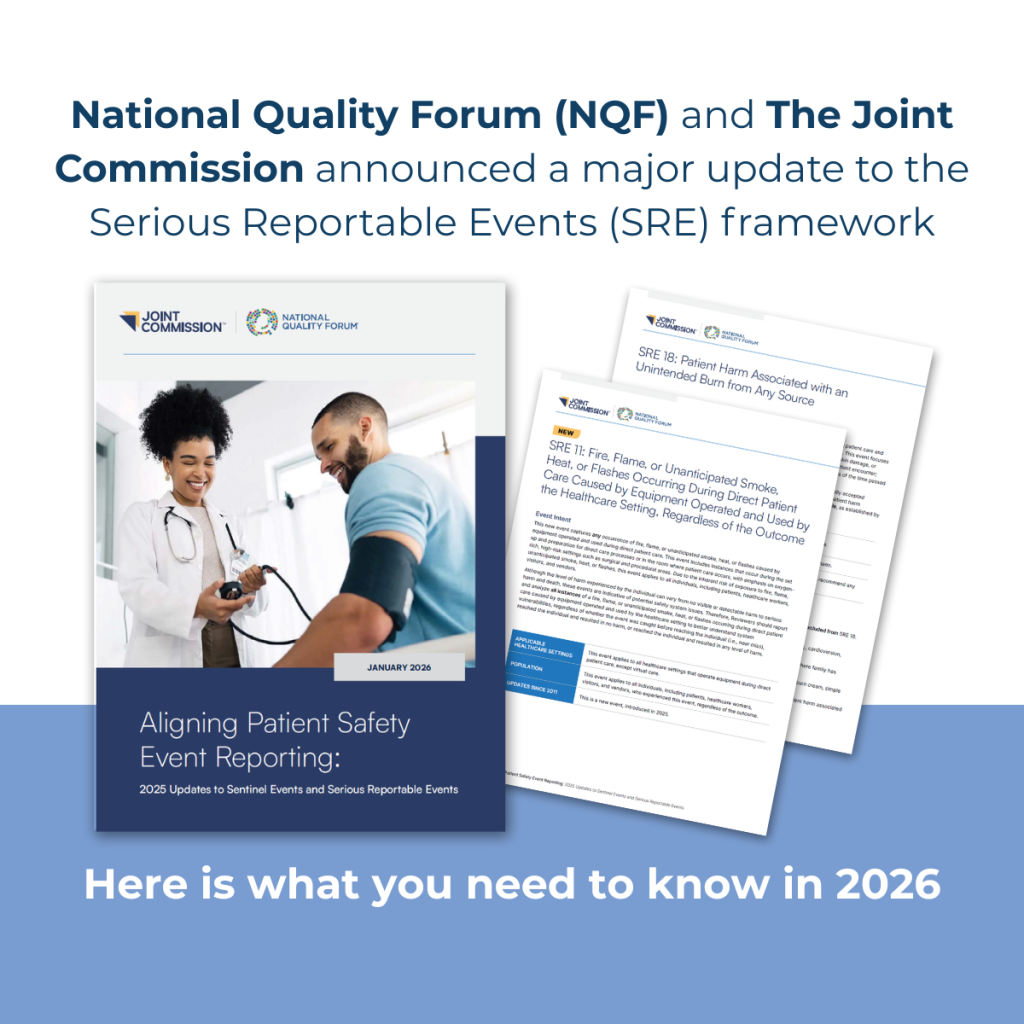
For surgical teams, this update has important implications, particularly for preventing fires and thermal injuries in the operating room and procedural environments.
A Modernized Framework for Patient Safety Events
Serious Reportable Events are defined as serious, largely preventable patient safety events that may indicate underlying safety system failures within a healthcare organization.
The updated framework introduces several important changes:
- Alignment of Joint Commission Sentinel Events and NQF SRE definitions
- Expanded applicability to all healthcare settings, including ambulatory surgery centers, outpatient procedures, and other alternative care sites
- Clearer event definitions and guidance to improve consistency in reporting and learning across organizations
This shift reflects the reality of modern healthcare delivery, where procedures are increasingly performed outside of the traditional hospital operating room.
Two SRE Categories Relevant to Surgical Burn Events
Within the updated SRE list, two event categories are particularly relevant to light cable-related burn incidents.
SRE 11: Product or Device Events
Fire, flame, or unanticipated smoke, heat, or flashes occurring during direct patient care caused by equipment operated and used by the healthcare setting, regardless of the outcome.
SRE 18: Care Provision Events
Patient harm associated with an unintended burn from any source.
These classifications highlight an important shift toward a systems-based approach to patient safety.
An intraoperative fire or overheating event involving surgical equipment would fall under SRE 11, even if patient harm is avoided. Conversely, a patient burn resulting from a thermal source may be categorized under SRE 18 if harm occurs.
This reinforces the importance of identifying and proactively mitigating known ignition sources in the surgical environment.
Surgical Fire Risk and Fiber-Optic Light Cables
Minimally invasive surgery depends heavily on fiber-optic light cables to illuminate the surgical field. However, the intense light transmission through these cables can produce extremely high temperatures at the distal tip.
Under certain conditions, exposed light cable tips can exceed 500°F, creating the potential to ignite drapes or cause thermal injury to patients and staff.
While these events are relatively rare, they are also high-consequence and largely preventable, which is precisely the type of risk the SRE framework is designed to address.
The updated SRE structure reinforces an important safety principle: near misses matter.
Even when an incident does not result in patient harm, it may still reveal vulnerabilities in processes, equipment handling, or operating room workflows that deserve attention and improvement.
Moving from Protocols to Proactive Safeguards
Historically, many operating room fire prevention efforts have relied on staff-dependent protocols, such as:
- Placing light sources in standby mode when not in use
- Avoiding contact between ignition sources and surgical drapes
- Maintaining communication during scope exchanges
While these practices remain essential, modern safety science increasingly emphasizes the addition of engineered safeguards that reduce reliance on human vigilance alone.
Designing systems that physically reduce risk can strengthen the reliability of fire prevention programs across surgical teams, specialties, and care settings.
Supporting Safer Surgical Environments
At Jackson Medical, we work closely with perioperative teams to help address one of the most common and often overlooked ignition sources in minimally invasive surgery: fiber-optic light cables.
GloShield is designed as a protective barrier that automatically shields exposed light cable tips, helping prevent contact with drapes or tissue during moments when the cable is disconnected from the scope.
By adding a layer of protection to existing equipment and workflow, surgical teams can strengthen their broader fire safety strategies and reduce the likelihood of near misses, thermal injuries, and reportable safety events.
Looking Ahead
The 2026 update to the SRE framework represents more than a reporting change. It reflects a broader evolution in patient safety thinking: preventable risks should be addressed proactively, not just analyzed after harm occurs.
For perioperative leaders, risk managers, and surgical teams, this is an opportunity to evaluate how current practices address known hazards in the operating room.
As surgical technology and care settings continue to evolve, the goal remains constant: safer systems, safer teams, and safer patients.
As your organization prepares for the effective date of January 1, 2027, strengthen surgical fire prevention and reduce light cable-related burn risk. Contact the Jackson Medical team and we would welcome the opportunity to collaborate.